AI potato and onion graders from India: a guide for Russian and CIS packhouses
As of October 2026, Indian makers build two kinds of machine for potato and onion packhouses: an AI optical sorter that photographs each item and rejects defects (Agrograde’s Vector Series, Pune), and mechanical size graders (roller, WaveMotion and mobile graders from Agrograde, G.D. Agro, Allround’s Ambala unit and Rama Jandu). None of their websites states EAC conformity.
Independent guide. We are not a dealer or agent of any maker named here, and enquiries stay with us. Makers’ figures are their own, read on their sites on 23 October 2026.
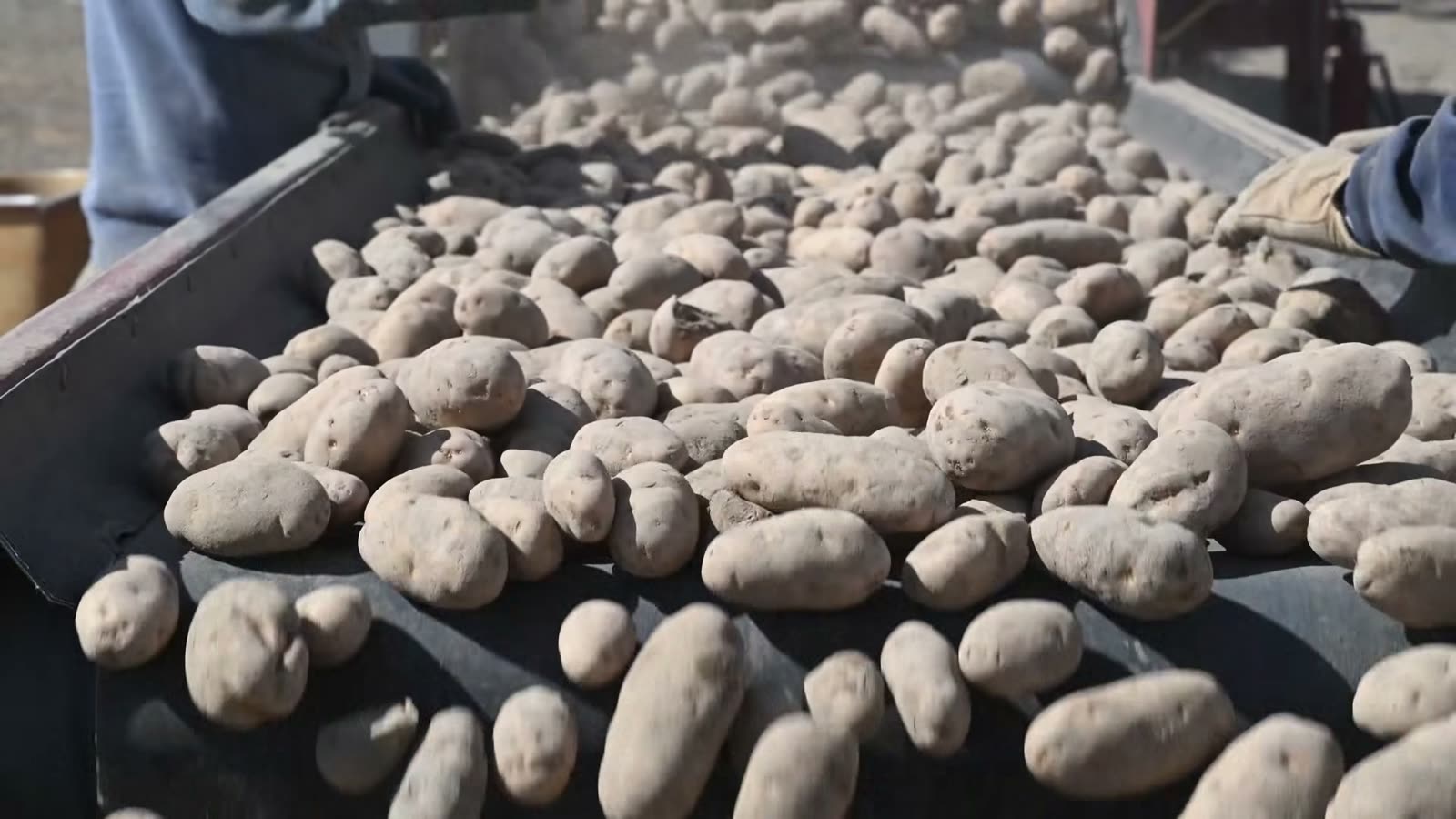
What Indian makers build for potato and onion
From each maker’s own website, read 23 October 2026. Capacities are as published; “estimated” is the maker’s word. Of these makers, only Agrograde publishes an AI optical sorter; the rest build size graders.
| Maker | Machine | What it does | Crops | As published |
|---|---|---|---|---|
| Agrograde | Vector Series | AI optical sorter: rejects defects | Potato, onion, tomato | 1–20 MT/hr across variants; up to 8 images per item; 20–160 mm input |
| Agrograde | GradePlus Max / Pro / MG | WaveMotion size grader (MG is tractor-mounted) | Onion, potato, garlic | Max 4–6, Pro 8–10, MG 4–6 MT/hr; 2–4 grades |
| Agrograde | Radial Plus Series | Lift roller size grader | Potato, oblong produce | 1–20 MT/hr; 3–6 grades |
| Agrograde | Gravity Series | Automated weighing for bagging | Fresh produce | 2–4 MT/hr; 7, 10, 18 or 20 kg packs |
| Agrograde | GradeMini (listed on occipital.in) | Onion grading machine | Onion; also potato | 3,000 kg/hr; single phase 220 V |
| G.D. Agro Industries | GD-PG200M / 500M / 1000M | Trailer-mounted mobile grader | Potato (also onion, garlic, other round vegetables) | 2 / 5 / 10 t/hr; 3 grades |
| G.D. Agro Industries | Radial type vegetable grader | Radial size grader | Potato, onion, garlic, tomato, lemon | 1–5 TPH by model; 3 HP, 3 phase; 2–5 grades |
| Allround (Ambala unit) | Radial grader R 80 – R 260 | Radial size grader | Potato, onion, carrot, beet and more | Potatoes: estimated 6–7 t/hr (R 80) to 45–50 t/hr (R 260) |
| Rama Jandu | Mobile potato grader, 3 to 5 grades | Mobile size grader | Potato | Up to 7.5 t/hr (3 grade) or 10 t/hr (4 and 5 grade); 8 HP diesel engine |
A size grader splits a lot into sizes; it does not see rot, greening or cuts. An optical sorter does that inspection, which otherwise happens by hand on a picking table. If you need both sizing and defect removal, price the two machines together as one line. For every grader and sorter type sold in India, with listed prices, see the potato grading and sorting machine guide on indianpotato.com. For how optical sorters work and how makers compare worldwide, see the optical sorting machine guide on foodprocessingworld.com.
Agrograde in brief
Agrograde is the brand of Occipital Technologies Private Limited: headquarters in Pune and manufacturing at Chakan, Pune, Maharashtra. It says it is building the technologies for autonomous packhouses, starting with AI grading and sorting.
What Agrograde says about the Vector
- Up to 8 images of each item as it turns under area-scan cameras
- Rejects rot, sprouts, greening, holes and cuts on potato
- Models run on the machine, with no cloud dependency
- Detection accuracy up to 96% across tested varieties (maker’s figure)
- No recalibration between varieties; 2–4 exit lanes
On record elsewhere
- A GradePlus Pro onion grader at a farmer producer company in Pimpalgaon, Nashik (Rural Voice, 19 August 2026; capacity and labour figures are the company’s)
- A joint venture with IG International, IG Agrograde, to sell and lease grading equipment in India and abroad (Fruitnet, 7 February 2023)
- No export market, Russian dealer or service partner named on agrograde.com
Model-by-model specifications are on the Agrograde maker page on indianpotato.com, and a full company profile is the Agrograde profile on indianpotato.com. Agrograde is not paying for any of these pages.
What to ask before you buy for a Russian or CIS packhouse
These are the points on which an Indian machine succeeds or stalls abroad. Where a maker publishes something, we say what; where it does not, ask.
Who comes when it stops?
No maker’s site we read names a service partner in Russia or the CIS. G.D. Agro and Rama Jandu describe service across India. Agree who commissions the machine, who trains your operators, response time, and what can be fixed remotely.
What wears, and where it is kept
Ask for the list of wear parts (belts, rollers, brushes, reject actuators, lights and cameras on an optical sorter), their prices, and which of them you should stock at your site for one season.
Voltage, phase, frequency
Few makers publish it. Agrograde’s GradeMini listing says single phase 220 V; G.D. Agro lists 3 HP, 3 phase for its radial grader; Rama Jandu’s mobile graders use an 8 HP diesel engine. Get the nameplate values in writing and match them to your site supply.
A trial on your varieties
Accuracy figures are the makers’ own, from their tests. Ask for a trial or a video run on your varieties, your defects and your soil, at your tonnage, and agree beforehand what counts as a pass.
Also ask
- Manuals, safety notices and the control screen in Russian
- How AI software updates reach a machine outside India
- Warranty terms and who carries them in your country
- Packed size and weight for freight
Before you sign
- Which EAEU regulations apply, and who holds the declaration or certificate
- Payment route and its timing
- The maker’s standing and real installations
- Delivery, installation and commissioning dates
More on selling machinery into Russia in our machinery sector page, and on payments in payment routes between India and Russia. We check makers before you sign through counterparty verification.
Certification: EAC and the EAEU technical regulations
Machinery placed on the market in the Eurasian Economic Union is assessed against the Union’s technical regulations. For an electrically driven grader or sorter, these three are the ones to check first. Dates as listed by the Eurasian Economic Commission (read 23 October 2026).
| Regulation | Title | Adopted by | In force |
|---|---|---|---|
| TR CU 010/2011 | On safety of machinery and equipment | Customs Union Commission Decision No. 823 of 18 October 2011 | In force 15 February 2013; amendments (EEC Council Decision No. 137 of 24 November 2023) in force 23 November 2024 |
| TR CU 004/2011 | On safety of low-voltage equipment | Customs Union Commission Decision No. 768 of 16 August 2011 | In force 15 February 2013; amended by EEC Council Decision No. 90 of 10 June 2022 |
| TR CU 020/2011 | Electromagnetic compatibility of technical equipment | Customs Union Commission Decision No. 879 of 9 December 2011 | In force 15 February 2013; amendments (EEC Council Decision No. 91 of 10 June 2022) in force 11 December 2022 |
Which of them apply to a given machine, and whether it needs a declaration of conformity or a certificate, follows from how the machine is classified, so settle that first with an accredited body. None of the five makers’ websites we read states EAC conformity for its graders. Decide early who will hold the document: the maker, the importer or you. Our guide to certification for the Russian market covers the order of work, and our conformity certification service can run it.
How we help
Tell us your crop and tonnes per hour; we reply within 2 working days.
For Russian and CIS packhouses
- The Indian machines that fit your crop and tonnage
- The questions to put to each maker
- What to check in a trial
- The certification route and who should hold it
For Indian makers and exporters
- Which EAEU regulations your machine faces
- Russian documentation and labelling
- Finding importers with service capability
- Showing machines at Russian trade fairs
We are independent. Your enquiry stays with us; we do not pass it to any maker. Russian food machinery buyers also meet at Agroprodmash 2027 in Moscow.
Tell us your crop and tonnes per hour.
Potato, onion or both; tonnes per hour; your country and site. We reply by email within 2 working days.
Enquire about a grading line
Form or email: hi@indiarussiatrading.com.
Common questions
+–Who makes AI potato graders in India?
+–What does the Agrograde Vector sorter do?
+–Do Indian potato graders have EAC certification?
+–What voltage do Indian grading machines run on?
+–What is the price of an Indian AI potato grader?
+–Who services an Indian grader in Russia?
+–How do you help Russian buyers?
+Sources and notes on the figures
Agrograde range and figures: agrograde.com/products, agrograde.com/technology and agrograde.com, read 23 October 2026. Legal name and Chakan address: occipital.in; GradeMini capacity, voltage and listed price: occipital.in onion grading lines, read 23 October 2026. Agrograde list prices: Agrograde storefront on IndiaMART, read 23 October 2026. G.D. Agro Industries: mobile potato grader, vegetable grader and home page, read 23 October 2026. Allround India (subsidiary of Allround Holland, Ambala): Ambala page and radial grader, read 23 October 2026. Rama Jandu (Jandu Agriculture Works, Moga): 3 grade, 4 grade and 5 grade pages, read 23 October 2026. Pimpalgaon installation: Rural Voice, 19 August 2026. IG Agrograde: Fruitnet, 7 February 2023. Technical regulations, adopting decisions and dates: Eurasian Economic Commission, regulations in force, TR CU 010/2011, TR CU 004/2011 and TR CU 020/2011 pages, read 23 October 2026. Photo: still from “Potatoes Sorting Montana2026”, USDA video by Brien Aho, public domain, via Wikimedia Commons.